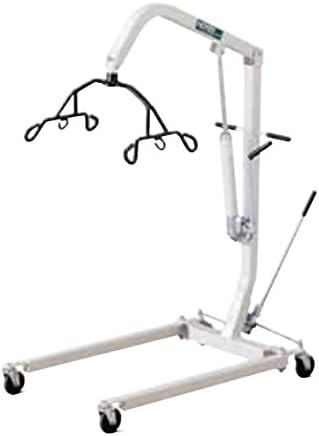
A Hoyer lift, also called a patient transfer lift, is built to help caregivers move someone with limited mobility safely between a bed, wheelchair, recliner, toilet, or other surface. It reduces the physical strain on both the patient and the caregiver during transfers, which lowers the chance of falls or injury.
Choosing the right Hoyer lift for home use matters, since the wrong fit turns simple transfers into a daily struggle. A home patient lift that suits the user's needs improves comfort and safety, and it can support more independence too. Before buying, weigh these factors.
Weight Capacity: Standard or Bariatric?
A lift's weight capacity is one of the first specs to check. Every patient transfer lift supports a specific weight range, and matching that range to the user's weight is what makes a transfer safe rather than risky.
Standard Hoyer lifts cover most adult users. Bariatric lifts are built for higher weight ranges, with reinforced frames, wider bases, and stronger lifting mechanisms.
If the user exceeds a standard lift's weight limit, a bariatric model is the safer option. Manufacturers often recommend electric lifts for heavier users too, since the motor does the lifting work instead of the caregiver.
Consider the Lift's Design
Lift design varies more than people expect, and the right one depends on where it will be used. A model built for a hospital floor will not necessarily work well in a spare bedroom.
Compact lifts tend to work best in homes since they fit through narrow hallways and standard doorways and turn easily in tight corners. They are also easier to maneuver in bedrooms and bathrooms where space is limited.
Larger lifts are common in hospitals, rehab centers, and long-term care facilities, where their extended reach makes it easier to position the lift around hospital beds and other equipment.
Before buying, measure your doorways, hallways, and the space around the bed or chair where transfers happen most. A lift that looks fine in a showroom can still be too wide for a home hallway.
Manual vs. Electric Hoyer Lifts
The next decision is manual or electric.
A manual Hoyer lift uses a hand-operated hydraulic pump. It costs less upfront, never needs charging, and works fine for households that only need it occasionally.
An electric Hoyer lift uses a battery-powered motor, so raising and lowering the patient takes a button press instead of physical effort. Transfers tend to be smoother and more comfortable for both people involved.
If transfers happen several times a day, or the user needs more support, an electric Hoyer lift is usually worth the extra cost.
Choose the Right Sling
The lift only does half the job. The sling matters just as much for comfort and safety.
Slings are built for different purposes: general transfers, toileting, bathing, full-body support. Which one fits depends on the user's mobility, body type, and medical condition.
Whatever sling you choose, confirm it's rated for the specific lift model before using it.
Look for Important Safety Features
A few safety features make a real difference in how secure a transfer feels.
Features worth considering include:
- Emergency lowering systems
- Locking rear wheels
- Adjustable base width
- Stable frame construction
- Battery backup indicators on electric models
These features keep transfers smooth and give caregivers one less thing to worry about.
Think About Caregiver Needs
A good lift works for the caregiver too, not just the patient.
If you're lifting someone multiple times a day, an electric model saves your back. Controls that are easy to use, smooth maneuverability, and sling attachments that don't take five minutes to figure out all add up over a long day of caregiving.
A lift that fits both the patient's needs and the caregiver's routine tends to get used correctly and consistently, which is really what keeps everyone safer.
Final Thoughts
A Hoyer lift makes home patient transfers safer and easier on everyone involved. The right one comes down to weight capacity, design, manual or electric operation, sling compatibility, safety features, and how much space you have at home.
Getting this right is worth the extra time upfront. A well-matched transfer lift for elderly patients or anyone with limited mobility can mean fewer injuries, less strain on caregivers, and more consistent daily care. If you're not sure which model fits your situation, Sky Medical Supplies can walk you through the options and help you find mobility equipment for home care that actually works for your space and routine.