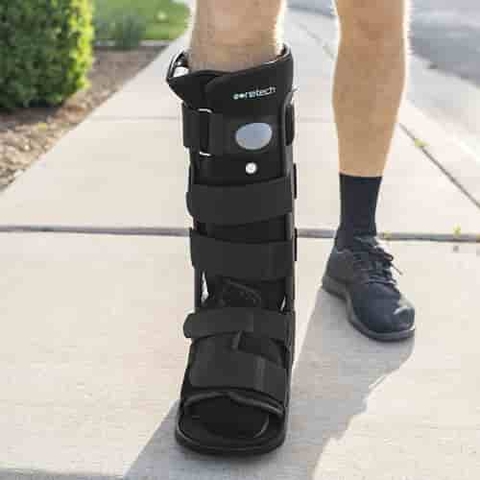
Recovering from a foot or ankle injury changes your routine fast. Getting to the kitchen, walking down the hall, or just standing long enough to make coffee can suddenly feel like a project.
Here's the thing though: recovery doesn't have to mean being completely stuck. A walking support boot can protect an injured foot or ankle while keeping you mobile enough to function at home. If you're dealing with an ankle sprain, foot fracture, tendon problem, or stubborn heel pain, the right orthopedic walking boot can make a real difference in how your recovery actually goes.
The trickier question is which type fits your situation.
What Is a Walking Support Boot?
A walking support boot, also called an orthopedic walking boot, stabilizes and protects the foot and ankle after an injury. It limits unwanted movement so the damaged area can heal without being constantly disturbed.
Compared to traditional casts, walking boots generally let you move around more comfortably while still keeping the injured area in check.
Doctors recommend them for a range of conditions, including:
- Foot fractures
- Ankle injuries
- Tendon inflammation
- Heel pain
- Stress fractures
Which boot makes sense depends entirely on the injury and what healing looks like for you.
Types of Walking Support Boots
Walking support boots come in a few different styles, matched to the type and location of the injury.
Short Walking Boot
A short walking boot runs from the foot to just above the ankle.
It tends to work for conditions affecting the foot, heel, or lower ankle area. Being shorter and lighter, it's often easier to manage during everyday movement around the house.
A short boot may help with:
- Mild foot injuries
- Heel pain
- Minor fractures
- Certain ankle conditions
Tall Walking Boot
A tall walking boot extends up to the calf and offers noticeably more support than a short one.
It's used for more serious injuries because it restricts movement in both the foot and lower leg. That added restriction can take pressure off the injury during healing.
Doctors often suggest a tall walking boot for:
- Sprained ankles
- Tendon injuries
- Broken foot bones
- Ankle fractures
The extra height helps stabilize the lower leg, which is why it's common in the earlier stages of recovery.
Air Walking Boot
An air walking boot has inflatable air cushions that add another layer of comfort and a more customized fit around the injury.
For some people, the adjustable compression feels more secure than a standard boot, especially when you're trying to stay active at home without overdoing it.
Hard Cast Boot Cover
A hard cast boot cover isn't quite the same thing as a walking boot. Its job is to protect an existing cast from daily wear and tear rather than directly healing an injury.
It makes getting around easier and helps the cast last the way it's supposed to.
Common Conditions That May Require a Walking Boot
Not every injury calls for the same level of support, and picking the wrong boot can slow things down rather than speed them up. Your doctor or physical therapist is the right person to confirm what makes sense for your specific situation.
Heel Pain and Foot Pain
Plantar fasciitis and general heel pain can make any amount of standing or walking feel exhausting.
A walking support boot takes pressure off the foot and gives irritated tissue time to recover. Some boots have a rocker-style sole that changes how your foot rolls through each step, which can reduce strain on sore spots. Depending on where the pain is coming from, either a short or tall boot might be recommended.
Foot Tendonitis
Tendonitis happens when tendons get inflamed from overuse or repeated strain.
Conditions like posterior tibial tendonitis or peroneal tendonitis often respond well to extra foot and ankle support during recovery. A tall walking boot is frequently used because it limits movement and lets the tendon rest properly. How long that takes depends on severity.
Sprained Ankle
An ankle sprain stretches or tears the ligaments around the joint.
For moderate to severe sprains, a tall walking boot for ankle sprain recovery is a common recommendation because it stabilizes the ankle and reduces movement during the early weeks. As things improve, your doctor will likely guide you toward other forms of support or light activity.
Stress Fractures
Stress fractures are small cracks in bone that develop from repeated pressure over time.
A walking boot limits motion and supports the bone while it heals. Taller boots tend to work better here because they control movement across more of the foot and lower leg.
Broken Foot or Ankle Fracture
Broken bones generally need stronger immobilization than a sprain or soft tissue injury.
Depending on the fracture, a walking boot for broken foot recovery may be worn for several weeks. The aim is to protect the injury while still allowing safe, limited movement. Healing timelines vary quite a bit based on which bone broke and your overall health.
How to Wear a Walking Support Boot Properly
Getting the fit right matters more than people often realize.
Sit down first, place your heel fully at the back of the boot, and tighten the straps until the fit is snug without cutting off circulation. If the straps feel too tight, circulation can be affected and swelling may get worse.
Check your foot regularly for redness, unusual swelling, or new irritation. If something feels off, bring it up with your healthcare provider rather than waiting it out.
Follow your doctor's guidance on how often to wear the boot and how much weight to put on the foot. Those instructions aren't arbitrary.
Choosing the Right Support for Recovery
Recovery from a foot or ankle injury takes time regardless of how well you manage it. But having the right home mobility support can make day-to-day life significantly less frustrating.
A walking support boot protects the injury while keeping you mobile enough to function. Whether you're looking at a short walking boot for heel pain or a taller option after a fracture, the type you choose should match the injury, not just your preference.
If you're unsure which type of foot support boot or recovery equipment fits your situation, talking to a professional is worth it. Recovery is easier when you're not guessing.