Getting off a toilet after hip surgery is harder than it sounds. Your hands search for something to grab. Your hips are not supposed to bend past 90 degrees. The standard seat puts you low enough that standing back up requires exactly the kind of movement your surgeon told you to avoid.
A raised toilet seat after surgery — sometimes called a toilet riser — closes that gap. It adds height, reduces how far you have to lower yourself, and keeps the strain off whatever you are recovering from.
What Is a Raised Toilet Seat?
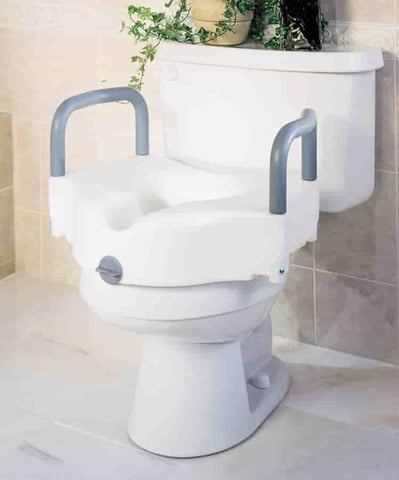
A raised toilet seat is a device that sits on top of your existing toilet bowl and adds a few inches of height. Most attach with a locking mechanism under the rim. Some come with armrests, others without.
The concept is straightforward: less distance to travel means less load on healing joints and muscles. For seniors, caregivers managing a loved one's recovery, or anyone who has been through a lower-body procedure, that reduction is more useful than it might seem from the outside.
Why Is a Raised Toilet Seat Helpful After Surgery?
After most orthopedic and lower-body surgeries, bending deep at the hip or knee is restricted for a reason. Those positions put direct stress on the surgical site. The problem with a standard toilet is that sitting on one usually requires going well below that safe range — especially if you are tall or the toilet is short.
A toilet riser solves this without rearranging your bathroom. It shortens the drop, makes standing back up less of a production, and keeps you from white-knuckling the towel bar every time you need to use the bathroom.
Practical benefits that matter during recovery:
- Less hip and knee flexion during each bathroom visit
- Less reliance on arm strength to lower and raise yourself
- Reduced fall risk when legs are still weak or stiff
- Better posture support during a part of the day that adds up fast
That last one is worth noting. Patients who are unsteady often compensate with awkward positions that create secondary soreness. A stable, correctly-sized seat removes some of that guesswork.
Who May Need a Raised Toilet Seat?
The most common use case is hip or knee replacement. Those surgeries come with strict bending precautions — typically no hip flexion past 90 degrees for the first six weeks — and a standard toilet usually puts you right at or past that limit.
It is also regularly used after:
- Back surgery, especially lumbar procedures
- Leg, ankle, or foot injuries with weight-bearing restrictions
- Any joint procedure that affects how you sit or stand
Seniors dealing with general weakness or balance problems find them useful outside of surgery as well. But post-surgical recovery, particularly after hip replacement, is where a toilet riser makes the most consistent difference.
What to Consider Before Buying a Raised Toilet Seat
Height of the Toilet Seat
Most risers come in 2-inch, 3.5-inch, and 5-inch lifts. The right height depends on your normal toilet height, your leg length, and your surgeon's bending restrictions. When seated, your feet should be flat on the floor and your knees roughly at or slightly below hip level. If the seat puts your knees above your hips, it is too high.
Shape and Fit
Toilets come in two shapes: round and elongated. Raised seats are shape-specific, and using the wrong one can leave gaps or cause the seat to rock. Check your toilet bowl before buying.
Comfort and Support
Padded seats reduce pressure for people who spend longer on the toilet due to constipation or discomfort — a common issue post-surgery. Armrests help if your arm strength is a limiting factor for standing up. Not everyone needs both, and adding features you will not use just makes the device harder to install and clean.
Weight Capacity
Raised toilet seats have weight ratings, and those ratings reflect real structural limits. Check before you buy.
Why Is a Raised Toilet Seat Often Recommended After Hip Replacement Surgery?
Hip replacement recovery involves movement restrictions that last weeks. The standard advice is to avoid letting the hip flex past 90 degrees, cross the legs, or rotate inward. Using a regular toilet violates at least one of those rules on every visit.
A raised toilet seat for hip replacement keeps the movement within the allowed range. That reduces risk during what is otherwise one of the more frequent daily activities for a person at home. It also takes pressure off the caregiver or family member who would otherwise need to physically assist with each bathroom trip.
How Long Should You Use a Raised Toilet Seat After Surgery?
For hip replacement, most patients use one through the first six weeks, which is typically when movement restrictions ease. Some continue longer. For knee surgery or back procedures, the timeline varies with how quickly strength and range of motion return.
Your physical therapist or surgeon will give you the clearest guidance on when to stop. The general rule is: if the standard toilet still feels unsafe or strains your recovery area, keep using the riser.
How to Use a Raised Toilet Seat Safely
Install it according to the manufacturer's instructions and test it before putting any weight on it. Check the fit daily for the first week. Some models shift if the locking mechanism is not fully engaged.
If your model has armrests, use them — that is what they are there for. Push through your arms on the way up rather than driving through the surgical leg.
Choosing the Right Raised Toilet Seat for Home Recovery
For most post-surgery situations, a raised toilet seat with arms is the more practical choice over a basic riser. The armrests reduce how hard your legs have to work on each stand, which matters when those muscles are still rebuilding.
One option patients frequently use during recovery is the NOVA Toilet Riser, which offers adjustable height settings, support arms, and a padded backrest. It works for a range of toilet shapes and body types.
At Sky Medical Supplies, you can find raised toilet seats and other home mobility aids after surgery that are suited to home recovery. If you are unsure which model fits your situation, the team can help you narrow it down based on your surgery type, toilet setup, and how far along you are in recovery.