Anyone who has undergone orthopedic surgery—such as an ACL reconstruction, total knee arthroplasty, or rotator cuff repair—knows that managing post-surgical swelling is a round-the-clock battle. For decades, the standard approach was simple: baggies of melting ice cubes, frozen gel packs, or bags of frozen peas wrapped in hand towels.
While freezing cold reduces inflammation, relying on traditional ice packs during acute post-operative recovery introduces constant friction for both patients and caregivers. A motorized continuous cold therapy unit replaces this cycle with regulated, uniform temperature delivery.
The Daily Struggle with Traditional Ice Bags
Traditional ice packs present several practical limitations during post-op recovery:
- Rapid Temperature Decay: An ice bag begins warming the moment it touches skin. It provides therapeutic cooling for only 15 to 20 minutes before turning into a lukewarm, dripping mass.
- Uneven Surface Contact: Joints are curved and complex. Flat ice packs drape awkwardly over a swollen knee or shoulder, leaving pockets of surgical swelling untouched.
- Frequent Freezer Runs: Keeping cold on an incision requires constant trips to the freezer. For a non-weight-bearing patient, this is impossible without continuous caregiver support.
- Moisture Risks on Dressings: Sweating plastic bags can leak onto sterile post-surgical bandages, introducing unwanted moisture to a healing incision.
How Continuous Cold Therapy Works
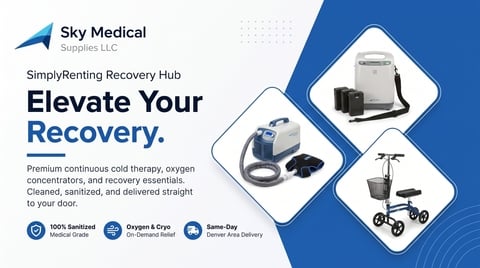
A cold therapy system consists of three components: an insulated cooling reservoir, an ultra-quiet motorized pump, and an anatomically contoured compression pad.
You fill the cooler with cold water and ice blocks, secure the pad over your surgical dressing using integrated elastic wraps, and plug in the unit. The pump continuously circulates chilled water through sealed internal channels at a steady, calibrated temperature.
Comparison: Ice Bags vs. Continuous Cryotherapy
| Evaluation Factor | Traditional Ice Packs / Gel Pads | Continuous Cold Therapy Unit |
|---|---|---|
| Duration of Active Cooling | 15–20 minutes before warming | 4 to 6 continuous hours per ice fill |
| Anatomical Coverage | Spotty; flat bags gap on curved joints | Full $360^\circ$ coverage with joint-specific pads |
| Caregiver Burden | Constant freezer runs day and night | Refill ice and water just 2–3 times daily |
| Nighttime Sleep Quality | Disrupted by melting, warm packs | Whisper-quiet cooling helps you sleep through the night |
| Condensation on Bandages | Elevated risk of dripping moisture | Sealed, insulated fluid channels prevent leaks |
| Equipment Lifespan Needed | Permanent household item | 2 to 4 weeks during acute recovery window |
Better Rest for Patients and Caregivers
Pain and throbbing frequently peak at night once nerve blocks wear off. Waking up every two hours to hobble to the kitchen or wake a family member for fresh ice interrupts deep healing sleep.
With an automated cold therapy unit beside the bed, a single reservoir fill before bedtime provides steady cooling for hours. Patients can rest comfortably without managing wet towels or shifting ice packs.
Why Renting Beats Buying for Cold Therapy
Continuous cold therapy is most critical during the first 14 to 28 days following surgery, when acute swelling and inflammatory fluid accumulation are at their highest. Once physical therapy progresses and inflammation stabilizes, the equipment goes back into storage.
- High Outright Cost: Purchasing a commercial-grade cryotherapy system with specialized joint pads costs between $200 and $400 out of pocket.
- Storage Footprint: After four weeks, the bulky cooler and tubing sit unused in a closet or garage.
- The Rental Alternative: Renting provides a fully sanitized, calibrated unit with a sterile, brand-new anatomical pad for the exact weeks you need it. When your orthopedic specialist clears you, simply return the machine.
Planning an upcoming orthopedic procedure in the Denver Metro area? Secure your Continuous Cold Therapy Unit online with guaranteed same-day local delivery and doorstep pickup at SimplyRenting Ice Therapy Rentals or call our local team at (720) 350-4073.