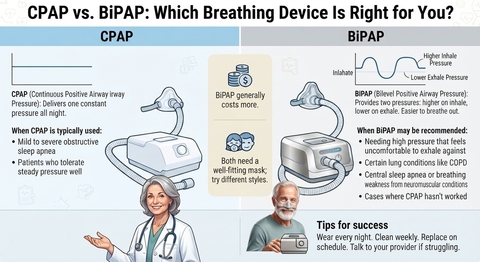
CPAP vs BiPAP: Which Breathing Device Is Right for You?
CPAP vs BiPAP is a common question for people starting sleep or breathing therapy. Both machines keep your airway open with pressurized air, but they work in different ways. This guide explains the differences so you can talk with your doctor about the right device.
What Is a CPAP Machine?
CPAP stands for Continuous Positive Airway Pressure. It delivers one constant pressure all night. It is the most common treatment for obstructive sleep apnea and is usually the first choice.
What Is a BiPAP Machine?
BiPAP stands for Bilevel Positive Airway Pressure. It provides two pressures: a higher one when you inhale and a lower one when you exhale. This makes breathing out feel easier.
When CPAP Is Typically Used
Mild to severe obstructive sleep apnea
Patients who tolerate steady pressure well
When BiPAP May Be Recommended
Needing high pressure that feels uncomfortable to exhale against
Certain lung conditions, like COPD
Central sleep apnea or breathing weakness from neuromuscular conditions
Cases where CPAP has not worked
Cost and Comfort
BiPAP machines generally cost more than CPAP machines. Both need a well-fitting mask. Try different styles, such as nasal, full face, or nasal pillows, until you find one you can wear comfortably.
Get a Proper Diagnosis
Your doctor will usually confirm which device and pressure you need through a sleep study. Don't self-prescribe. Incorrect settings can be ineffective or uncomfortable.
Tips for Success
Wear your device every night. Clean your equipment weekly. Replace masks and filters on schedule. If you struggle with your device, talk to your provider. Adjustments often solve the problem.
Frequently Asked Questions
Is BiPAP better than CPAP?
Not necessarily. CPAP works well for most people with obstructive sleep apnea. BiPAP is usually recommended when CPAP is uncomfortable or does not work.
Can I switch from CPAP to BiPAP on my own?
No. Your doctor must prescribe the device and the pressure settings. Talk to your provider if CPAP is not working for you.
Need Help Choosing?
Not sure which device fits your needs? Browse our CPAP and BiPAP equipment or contact our team for help.