How to Choose an Oxygen Concentrator
An oxygen concentrator pulls in room air, filters out nitrogen, and delivers concentrated oxygen. If your doctor has prescribed oxygen therapy, choosing the right oxygen concentrator matters. This guide explains the main types and the features to compare.
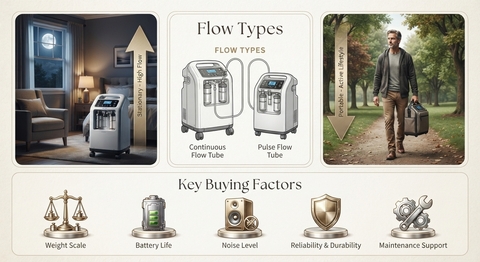
Stationary units deliver higher flow rates. They are made for home use, usually overnight. Portable oxygen concentrators (POCs) run on batteries. They are lighter and made for travel and daily activity.
Continuous Flow vs. Pulse Flow
Continuous flow delivers a steady stream of oxygen. Pulse flow releases oxygen only when you inhale. Many portables are pulse-only. Make sure the type matches your prescription.
Key Features to Compare
Flow rate: It must meet your prescribed liters per minute (LPM) or pulse setting.
Battery life: Look for long life and swappable batteries if you are active.
Weight and size: Portables range from about 2 to 20 pounds.
Noise level: This matters for sleeping and public spaces.
Airline approval: Look for FAA approval if you plan to fly.
Always Start With a Prescription
Never buy an oxygen concentrator without a prescription. Oxygen is a medical treatment, and your prescription sets the flow you need. Don't choose a unit based on price alone.
Maintenance Matters
Clean the filters regularly. Follow the manufacturer's service schedule. Keep a backup oxygen source in case of a power outage.
Choose a Reputable Supplier
Buy from a supplier that offers a warranty, support, and clear return policies. A little research now gives you confidence and comfort for years.
Frequently Asked Questions
Can I take a portable oxygen concentrator on a plane?
Many airlines accept FAA-approved units. Check with your airline before you travel.
Is an oxygen concentrator the same as an oxygen tank?
No. A tank stores oxygen. A concentrator makes oxygen from room air, so it needs power or a battery.
Need Help Choosing?
Not sure which oxygen concentrator fits your needs? Browse our oxygen equipment or contact our team for help.