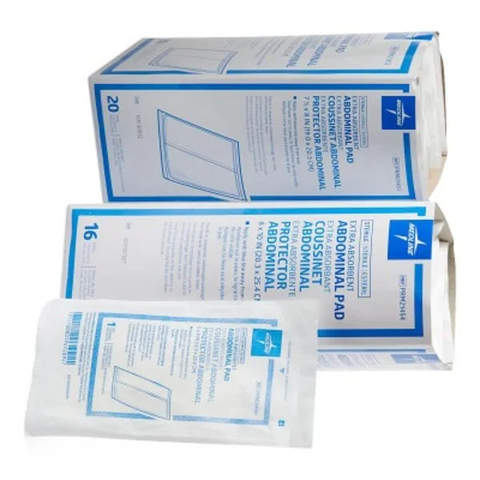
Large wounds and surgical incisions often produce more drainage than regular gauze can handle. In these situations, abdominal pads, commonly called ABD pads, help protect the wound while absorbing excess fluid. They are designed for wounds that need extra coverage, cushioning, and absorbency during recovery.
ABD pads are commonly used after surgery, for pressure sores, ulcers, traumatic injuries, and other wounds with moderate to heavy drainage. Their thick absorbent layer helps keep moisture away from the skin while creating a cleaner healing environment.
Choosing the right wound dressing matters. A poorly matched dressing may leak, stick to the wound, or require constant changing. A quality abdominal pad helps reduce irritation, improves comfort, and supports better wound management during recovery.
What Are Abdominal Pads?
Abdominal pads are thick absorbent wound dressings designed to handle moderate to heavy wound drainage. Despite the name, they are not only used for abdominal wounds. They can also be used on the legs, hips, back, chest, or any larger wound area that needs extra absorbency.
Most ABD pads are made with multiple layers. The inner layer absorbs wound fluid while the outer layer helps prevent leakage. Many also include a soft non-woven surface that reduces irritation when placed against sensitive skin.
Because of their absorbent design, ABD pads are commonly used as part of post-surgery wound care and other situations where standard gauze may not provide enough protection.
How Do ABD Pads Work?
ABD pads work by pulling drainage away from the wound and trapping it inside the dressing. This helps keep the wound area cleaner and reduces the risk of excess moisture sitting on the skin for long periods.
The sealed edges help minimize leakage while the thick center layer distributes fluid evenly throughout the pad. This design helps reduce skin irritation and makes dressing changes more manageable.
In some cases, an abdominal pad is placed directly over the wound. For wounds with heavier drainage, it may be used as a secondary dressing over another wound care product such as gauze, alginate dressing, or transparent film dressing.
Proper wound moisture is important during healing. ABD pads help maintain a balanced environment while protecting the wound from outside contaminants.
Types of Abdominal Pads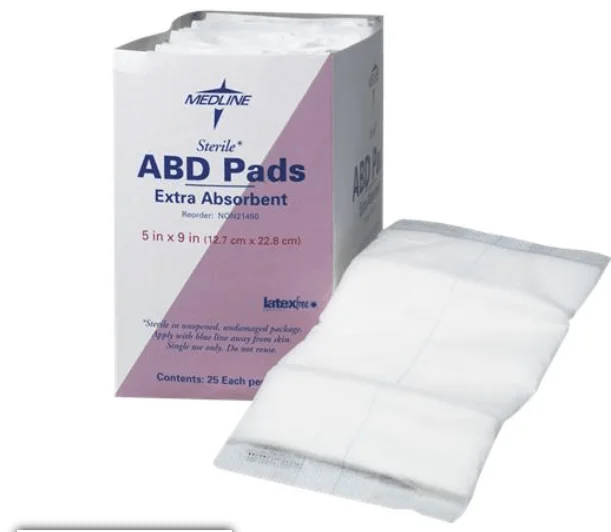
ABD pads are generally available in sterile and non-sterile options.
Sterile ABD Pads
Sterile abdominal pads are individually packaged to help reduce contamination. They are commonly used for surgical incisions, open wounds, and situations where cleanliness is especially important.
These pads are often preferred during early stages of wound healing or when directed by a healthcare provider.
Non-Sterile ABD Pads
Non-sterile pads are usually used for lower-risk situations, added cushioning, or secondary wound coverage. They can also be useful for frequent dressing changes where sterile packaging may not be necessary.
The right choice depends on the wound condition, drainage level, and care instructions provided by a healthcare professional.
Benefits of Using Abdominal Pads
One reason ABD pads are widely used is their ability to handle larger amounts of drainage without needing constant replacement. They also provide cushioning that improves comfort for patients recovering from surgery or injuries.
Some key benefits include:
- High absorbency for moderate to heavy wound drainage
- Soft non-woven surface for improved comfort
- Sealed edges that help reduce leakage
- Extra padding for sensitive areas and pressure points
- Available in multiple sizes for different wound types
- Can be used as either primary or secondary dressing
For many caregivers and recovering patients, ABD pads make wound management easier and more comfortable at home.
How to Apply an Abdominal Pad Properly
Before applying an abdominal pad, wash your hands thoroughly and clean the wound according to your healthcare provider’s instructions.
Place the white absorbent side of the pad directly against the wound. The outer side with the moisture-resistant barrier should face outward. If needed, the pad can be folded gently to fit the wound area more securely.
Once positioned, secure the dressing using medical tape, gauze wrap, or another appropriate covering. The dressing should stay in place without applying excessive pressure.
ABD pads are usually changed once or twice daily, depending on the amount of drainage. If the dressing becomes soaked, loose, or contaminated, it should be replaced sooner.
If you notice worsening redness, odor, swelling, or unusual drainage, contact a healthcare professional promptly.
How to Choose the Right Abdominal Pad
Not every wound requires the same type of dressing. Choosing the right ABD pad depends on several important factors.
Drainage Level
Wounds with heavier drainage need a more absorbent pad to help prevent leakage and skin irritation. Lighter drainage may only require moderate absorbency.
Pad Size
The dressing should fully cover the wound while extending slightly beyond the wound edges. Using a pad that is too small may lead to leakage and poor protection.
Comfort and Skin Protection
Soft non-woven materials can help reduce sticking and discomfort during dressing changes. Some pads also offer extra cushioning for pressure-sensitive areas.
Sterile vs Non-Sterile
For surgical wounds and open injuries, sterile abdominal pads are often the safer option. Non-sterile pads may work well for additional coverage or lower-risk applications.
Choosing a reliable absorbent wound dressing can make recovery more comfortable while reducing the stress of frequent dressing changes.
Final Thoughts
Abdominal pads play an important role in wound care for patients recovering from surgery, injuries, or chronic wounds with moderate to heavy drainage. Their absorbent design helps protect the wound, reduce leakage, and improve comfort during healing.
Whether used in professional care settings or during recovery at home, the right ABD pad can make wound management safer and more manageable. Understanding the wound type, drainage level, and dressing size helps ensure better support throughout the healing process.
For patients and caregivers looking for dependable wound care supplies, choosing high-quality abdominal pads can make a noticeable difference in comfort, cleanliness, and overall recovery.