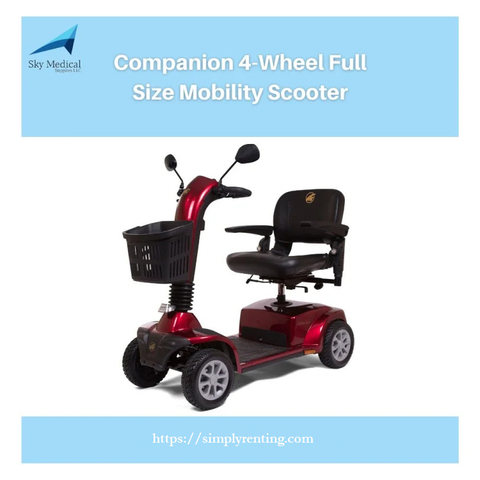
Getting around safely on your own terms matters, and a mobility scooter can make that possible for a lot of people. Shopping trips, medical appointments, family visits, even just moving around the house: a good scooter handles all of it.
But pick the wrong one and you trade one problem for another. A scooter that is too cramped, too wide, or missing the right controls gets uncomfortable fast and harder to manage over time. In some situations, a poor fit can actually increase fall risk rather than reduce it.
That is why working through a mobility scooter size guide before buying is worth the time. The details below cover what to measure, what to compare, and what safety features actually matter.
Why Mobility Scooter Size Matters
No single scooter fits everyone. Body size, daily routine, where the scooter gets used most, and how much physical support the user needs all factor into the right choice.
A well-fitted scooter is more comfortable to sit in for longer periods and easier to control in tight spaces. A poorly fitted one creates fatigue and compensating postures that cause problems over time.
Before comparing models, nail down the following measurements.
1. Seat Width
Seat width tends to get overlooked until someone sits down and immediately notices the problem.
Measure the widest part of the body in a seated position, usually across the hips or thighs. Add about an inch of clearance on each side for comfortable seating. If a cushion or positioning pad will be used, go slightly wider to account for the extra bulk.
A seat that is too narrow pinches and restricts movement. One that is too wide shifts the user around and reduces lateral stability. Also consider the scooter's overall width if doorways or narrow aisles are part of the daily routine.
2. Seat Height
The right seat height lets the user sit with feet resting naturally and knees at a slight bend. Too high or too low and transfers onto and off the scooter become harder.
Think practically about what the scooter will be used alongside: kitchen counters, bathroom sinks, dining tables. Getting the height right means less awkward reaching and leaning throughout the day.
Most scooters offer some seat height adjustment, so this is usually fixable if the base model is slightly off.
3. Back Support Height
For someone spending significant time in the seat, backrest height is not a minor detail.
A good starting point is support through at least the mid-back, ideally just below the shoulder blades. Users who need more support should look for high-back options with headrests built in.
One easy thing to miss: if a seat cushion is added later, that extra height changes the effective back support position. Factor that in before finalizing a choice.
4. Weight Capacity
Every scooter has a rated weight limit, and staying comfortably below it matters for performance, not just safety.
A scooter loaded close to its maximum limit will run slower, drain the battery faster, and handle less predictably. Real-world weight means the user plus anything carried along, including groceries, an oxygen concentrator, bags, or other gear.
Standard models typically handle moderate weight ranges well. Heavy-duty scooters built for bariatric users can support up to 500 or 600 pounds depending on the model.
5. Wheels: 3-Wheel vs. 4-Wheel Scooters
The wheel configuration changes how the scooter handles, and it matters a lot based on where it will be used most.
3-Wheel Scooters
Three-wheel scooters turn more easily and navigate tighter spaces better. They work well indoors, in apartments, grocery stores, or anywhere with narrow aisles. For someone who primarily needs a mobility aid for home use, a three-wheel model is often the right call.
4-Wheel Scooters
Four-wheel scooters are more stable, especially on outdoor surfaces like sidewalks, parking lots, or uneven ground. The trade-off is a larger turning radius, which can make tight indoor maneuvering frustrating.
If outdoor use is the priority and stability is the main concern, four wheels is the better choice.
6. Braking System
Most mobility scooters use electromagnetic braking that engages automatically when the user releases the throttle. The scooter slows and stops without any manual brake action required. This keeps control consistent and reduces the reaction time required to stop.
Many models also include a freewheel mode so the scooter can be pushed manually when needed. Switching back to drive mode before using it again is essential. Driving in freewheel mode disables the braking system and creates a real safety risk.
7. Controls and Hand Operation
The standard control is a lever called a wigwag, mounted on the handlebar. Depending on the model, it works with the thumb, fingers, or a combination. Higher-end scooters sometimes offer multiple control configurations.
For anyone with limited hand strength or reduced dexterity, testing a few different control setups before buying is a better approach than assuming one style will work.
8. Tillers and Steering Comfort
The tiller is the front column that holds the handlebars and controls. On most scooters, the tiller angle can be adjusted to bring the controls closer or push them further away.
Getting this right reduces shoulder and arm strain during use. The user should also confirm there is enough clearance between the tiller and their knees when seated.
9. Seat Comfort and Transfer Features
Basic scooters come with a padded seat, armrests, and back support. Larger models add extra cushioning, headrests, and upgraded fabrics.
Seat swivel is a feature worth paying attention to. Many scooters allow the seat to rotate 90, 180, or 360 degrees, which makes getting on and off significantly easier. Flip-up armrests serve the same purpose for users transferring from a walker or wheelchair.
For seniors or users in post-surgical recovery, these features can matter more than almost anything else on the spec sheet.
10. Battery Size and Travel Range
Battery size determines how far the scooter can go on a single charge. Compact travel scooters carry smaller batteries with shorter ranges. Full-size scooters handle heavier daily use and longer distances before needing a recharge.
Before choosing, think through:
- How many hours per day the scooter will run
- Whether use is mostly indoor or outdoor
- Average daily distance covered
- How easy it is to access a charging point
For someone running multiple errands or using the scooter for most of the day, a longer battery range is not optional. It is the whole point.
11. Storage and Walking Aid Holders
Most scooters include a front basket for bags or personal items. Some models also have holders for canes, walkers, crutches, or oxygen accessories.
One thing worth watching: stacking too much weight behind the seat shifts the scooter's center of gravity and can affect handling. Front storage is generally safer for heavier loads.
12. Weather Protection Features
Some scooters have optional canopies or fitted rain covers for outdoor use. These work well for light rain and keep the seat and controls dry.
Folding canopies that retract when not needed are the most practical option. In strong winds, a canopy can act like a sail and make steering harder, so they are best left down in rough weather.
Safety Tips Before Choosing a Mobility Scooter
Match the scooter to the environment it will be used in most. A scooter built for outdoor terrain will feel clunky indoors, and a compact indoor model will struggle on uneven ground.
Check the weight capacity against actual expected load, not just the user's body weight.
Test the controls before buying if at all possible.
Measure doorways, hallways, and any vehicle lifts if the scooter will be transported regularly. A scooter that does not fit through the garage door or into the car lift is not the right scooter.
Final Thoughts
A mobility scooter that fits well and includes the right safety features gives people back real independence. One that does not fit ends up parked in a corner.
Taking time to compare seat dimensions, weight ratings, wheel type, and control options before buying pays off. The right home mobility equipment does not just make getting around easier. For a lot of people, it changes what their day looks like.