Compression Socks Explained: Benefits, Types, and Who Should Wear Them
Compression socks apply gentle pressure to your legs and help blood flow back toward the heart. Nurses, travelers, athletes, and people managing certain health conditions use them. This guide explains the benefits, the types, and who should wear compression socks.
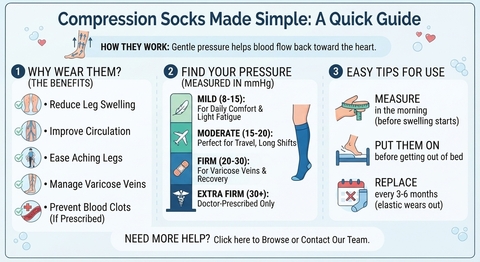
Benefits of Compression Socks
Reduced leg swelling and tiredness
Improved circulation
Relief from aching legs after long periods of sitting or standing
Support for managing varicose veins
Help in reducing the risk of blood clots in certain situations, when recommended by a doctor
Types of Compression Socks
Compression is measured in mmHg. A higher number means firmer pressure.
Mild (8-15 mmHg): Everyday comfort and light fatigue
Moderate (15-20 mmHg): Travel, long work shifts, and mild swelling
Firm (20-30 mmHg): Varicose veins, post-surgery recovery, and more significant swelling
Extra firm (30+ mmHg): Prescribed for specific medical conditions
Compression Sock Lengths
You will also find different lengths. These include knee-high, thigh-high, and full pantyhose styles. Knee-high is the most common.
Who Might Benefit From Compression Socks
People who stand or sit for long hours
Pregnant women
Frequent flyers
Seniors with swelling
People recovering from surgery or vein problems
Who Should Be Cautious
If you have peripheral artery disease, severe neuropathy, or skin infections, talk to your doctor first. Compression can be harmful in some circumstances.
Fitting Tips for Compression Socks
Measure your legs in the morning, when swelling is lowest. Put your socks on before you get out of bed. Replace them every 3 to 6 months, because the elastic wears out.
Frequently Asked Questions
What compression level should I choose?
It depends on your needs. Mild and moderate levels suit everyday comfort, travel, and long shifts. Firm and extra firm levels are usually for medical conditions, so ask your doctor first.
How often should I replace compression socks?
Replace them every 3 to 6 months. The elastic wears out over time, and worn socks no longer give the same support.
Need Help Choosing?
Not sure which compression socks fit your needs? Browse our compression socks or contact our team for help.