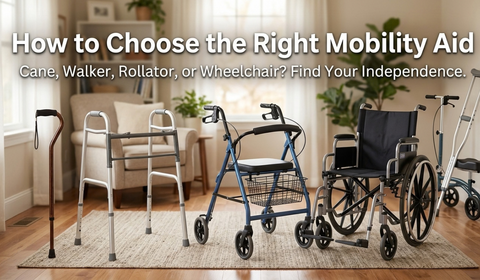
Which Mobility Aid Is Right for You?
Choosing a mobility aid is a big decision. The right mobility aid helps you stay independent, and the wrong one can cause discomfort or even falls. Here is how the main options compare, so you can find the one that fits your needs.
Every option serves a different need. Whether you need help with balance after an injury or support for everyday walking, the right choice depends on how far you walk, where you go, and how much support you need. Comparing your options before you buy or rent helps you avoid wasted money and, more importantly, avoid falls.
Canes: Light Support for Mild Balance Issues
Canes are best for mild balance issues or minor pain in one leg or hip. They are lightweight and portable, but they only offer limited support.
Walkers: Stable Support for Recovery
Walkers have four legs, or two wheels in front, and give much more stability than a cane. They suit people recovering from surgery and those who need steady support with every step. Most need to be lifted or pushed forward, so they are better for shorter distances.
Rollators: Walk, Rest, and Keep Going
Rollators are walkers with wheels, hand brakes, and usually a built-in seat. They are ideal if you can walk but tire easily, since you can stop and rest anywhere. They are also great for outdoor use.
Wheelchairs: Support for Longer Distances
Wheelchairs are for people who cannot walk far or safely. A power wheelchair is a good choice if arm strength or stamina is limited, while a manual chair is lighter and more affordable. If you only need one for a short time, renting a wheelchair is a practical option.
Other Options: Crutches and Knee Scooters
Crutches suit short-term injuries, and a knee scooter is a comfortable alternative for foot or ankle recovery.
Questions to Ask Before Choosing a Mobility Aid
- How far do I need to walk each day?
- Do I need to rest often?
- Will I use it indoors, outdoors, or both?
- Can I lift and transport it easily?